

HOW TO JOURNAL
A journal is a deeply personal tool and you can use it however you like... but sometimes that free rein is weirdly daunting. It took me years to start using one and now I have no idea how I got through life without it.
I often get questions about how I journal so I figured I'd break it down for you. I hope it can help you get started, pick it back up, or perhaps find another way to use this incredible tool we all have access to. If writing isn't your thing or you don't have the ability to write, voice notes on your phone are a great option that you can use in a very similar way.
Whatever outlet you choose...
"Better out than in, I always say!"
- Shrek
Before I started journaling I was quick to turn to those around me for advice on how to live my life. I was indecisive and either assumed other people knew me better than I knew myself or I simply had no idea how to trust my intuition.
Now, after journaling for a few years, I've realised that some of the best advice and guidance I receive is when I take time to be still and open. My journal often feels like a portal. It's where I go to tap into my intuition and whoever else seems to have a direct line to my mind. A place where thoughts and feelings can be made into something tangible.
I mostly use my Journelle to:
- seek clarity
- receive guidance
- process emotions and situations
- write down goals and work out a plan to achieve them
My journal has also felt like a very effective therapist at times. It's something that has helped me through some extremely challenging periods. I wasn't aware just how powerful putting pen to paper could be until I read back over some of my journals at the end of a difficult time. It made me realise that we're never alone. Our ability to solve problems and cheer ourselves on is amplified when we take time to tune in and get quiet. In saying that, I also highly recommend seeing a therapist too!
“We do not write in order to be understood;
we write in order to understand.”
– C. Day Lewis
Important to remember:
Your journal is for you. No one else has to read it. It doesn't need to be neat, perfectly worded, or poetic. It's not a published book that people are going to critique. It's just for you.

THE TOOL KIT
Favourite journal: Journelles
Chocolate (medium) is my go-to!
Favourite pen: Uni Laknock 0.7 I buy the bulk pack in black.
What I use for everything else: A4 visual art diary or a Daily Diary
I use these every day for my work to-do lists and anything else I need to scribble down. That way I can keep my Journelle for personal use. I simply dot point my tasks and highlight them as I go. It's a great way to consolidate my lists and know what I have to get through.
Q & A
I hope my answers to the following questions can help you realise there's no right or wrong way to journal. The less rules you have, the better your experience will be.
Let's kick this off with our biggest fear.

How to get over not wanting to ruin the pretty book?
I put off journaling for years for this very reason. I felt like it was only worthy of perfect handwriting and poetic entries. That journal sat on my shelf for 4 years. And one day I thought 'well, it either continues sitting there, empty, or I get over myself and write in it'.
Now it's something that doesn't even cross my mind. The more I use it, the more I love it, and the more special it becomes.
What to write about?
We can take photos and videos to remember how things look. However I find the best way to remember feelings and moments is by putting pen to paper.
When I read over one of my past Journelles I was particularly drawn to (and thankful for) the times I expressed how I was feeling. Moments pass, and feelings can fade and change quickly so it was nice to look back on those entries and have the ability to drop into that particular frame of mind. They are the intricacies I would otherwise forget.
I love reading back over my goals and entries that showed how I was feeling before I had reached them. This is a time where I often give myself pep talks (in writing) to get myself over the line. I love that I trusted those instincts and followed through. To know how I felt and what I was struggling with right before things came to fruition compared to how I felt once I had achieved them was a powerful exercise.
I also enjoy reading how I felt before some huge shifts and changes. In that moment you have no idea what's just around the corner. Then things change and soon the present moment becomes your new normal. I'm glad I can find time stamps of how I felt in particular chapters.
Other things I write in my Journelle:
- Ideas
- Quotes
- Realisations
- Celebrating wins
- Lightbulb moments
- Memorable moments
- Things I'm manifesting
- Advice from friends & family
- Processing grief & connecting with those I can't speak to in person
- Challenges I set myself - eg. a previous challenge was having a cold shower / cold plunge every day in Winter & I recorded how I felt & lessons I learnt.
- Notes + workbook activities from books I was reading
- Notes from the Universe - A free email subscription that I love where you receive daily notes. I like to write down ones that really hit home.
Where to start?
When I first started journaling I wasn’t too sure how to start or what to write about, so I broke the ice by writing a few quotes I wanted to remember and pieces of advice I had received. A blank journal can feel a little intimidating. Once you start it gets much easier. I like to leave the very first page blank or use this for a quote / mantra for the year.
Writing down your goals can be a nice and easy place to start. Or simply 'things you'd like to experience'.
Is it a daily ritual?
I use my journal whenever I feel like it or whenever it feels necessary. It’s not something I force myself to do. Sometimes it’s daily, other times a month or so can go by.
If you are keen to dive into journaling and feel as though you need to commit for a period of time in order to get the feel for it, I'd recommend committing to a particular amount of time daily or weekly until you get in the flow.
Do you journal at a specific time of day? eg. morning / evening.
I journal whenever I feel like it, but it is often when I wake up or before I go to sleep.
If you're new to journaling, experiment with different times of the day and notice when the words flow with more ease - first thing in the morning to kick off the day on a good note or right before bed to create space before your head hits the pillow. Or a combo!
I also love a solo coffee date with my Journelle at a café. It feels like a nice opportunity to sit down, catch up with myself, and take as much time as I need to write without any distractions. I've had to ban myself from doing this at the café before a gym session... I end up sitting there for an hour writing and then leave because I CBF doing a workout.
How long do you spend writing?
This varies a lot and completely depends on what I feel like writing about or what I’m seeking answers for. I have zero structure. Sometimes it’s as short as a quick quote. Other times it can be multiple pages. eg. To kick off the new year I wrote 8 pages.
Do you write lengthy or do a bullet journal?
A bit of both depending on the topic. I usually write in full sentences but I use bullet points for lists and notes.
How to write it? eg. first person
There are no rules. I often write in first person but it can quickly switch to ‘someone giving me advice’ half way through. If you flicked through my Journelle you’d probably think I sounded crazy but like I said – I write in order to understand. The voice with the advice is not usually mine so I write as though I’m hearing it.
An excerpt from ‘The Little Red Writing Book’ by Mark Tredinnick may help you understand why so many of us are uncomfortable writing in first person.
I’m afraid someone will find it and read it. Keeps me from being honest and real.
Have an open conversation with those around you. Sam & I both like to journal and we have had a chat about this. We both respect each other’s privacy and his response was ‘I have zero desire to read yours’.
There aren’t many people that would have access to my journal but I have felt a touch uneasy about what would happen if I left it at a café or what will happen to them when I die. To be honest, there isn’t anything juicy in there so it would probably be a boring read and make little sense to someone else.
I spoke with a friend who also keeps a journal and we made a pact that we would each make sure they were looked after if something happened to us.
If you are scared of writing because you have a fear of vulnerability, I suggest watching Brene Brown’s ‘Call to Courage’ on Netflix or reading her book ‘Daring Greatly’.
If you are worried about someone finding your journal because it mentions them, consider the following.
“Speak with integrity. Say only what you mean. Avoid using the word to speak against yourself or to gossip about others. Use the power of your word in the direction of truth and love.”
— Don Miguel Ruiz (Book: The Four Agreements)
Sometimes the Notes app in my phone is my outlet. A place that I can express feelings that I simply need to get out of my system. Not necessarily words that require a permanent place in my Journelle.
Can you touch on goal setting and manifestation?
Writing things down is a powerful way to turn ideas into reality.
I often get questions on this and I think some people assume there is a crazy secret to it and if you miss a step it won't happen. When really, the gist of it is getting really clear on what you want and following the steps to get there.
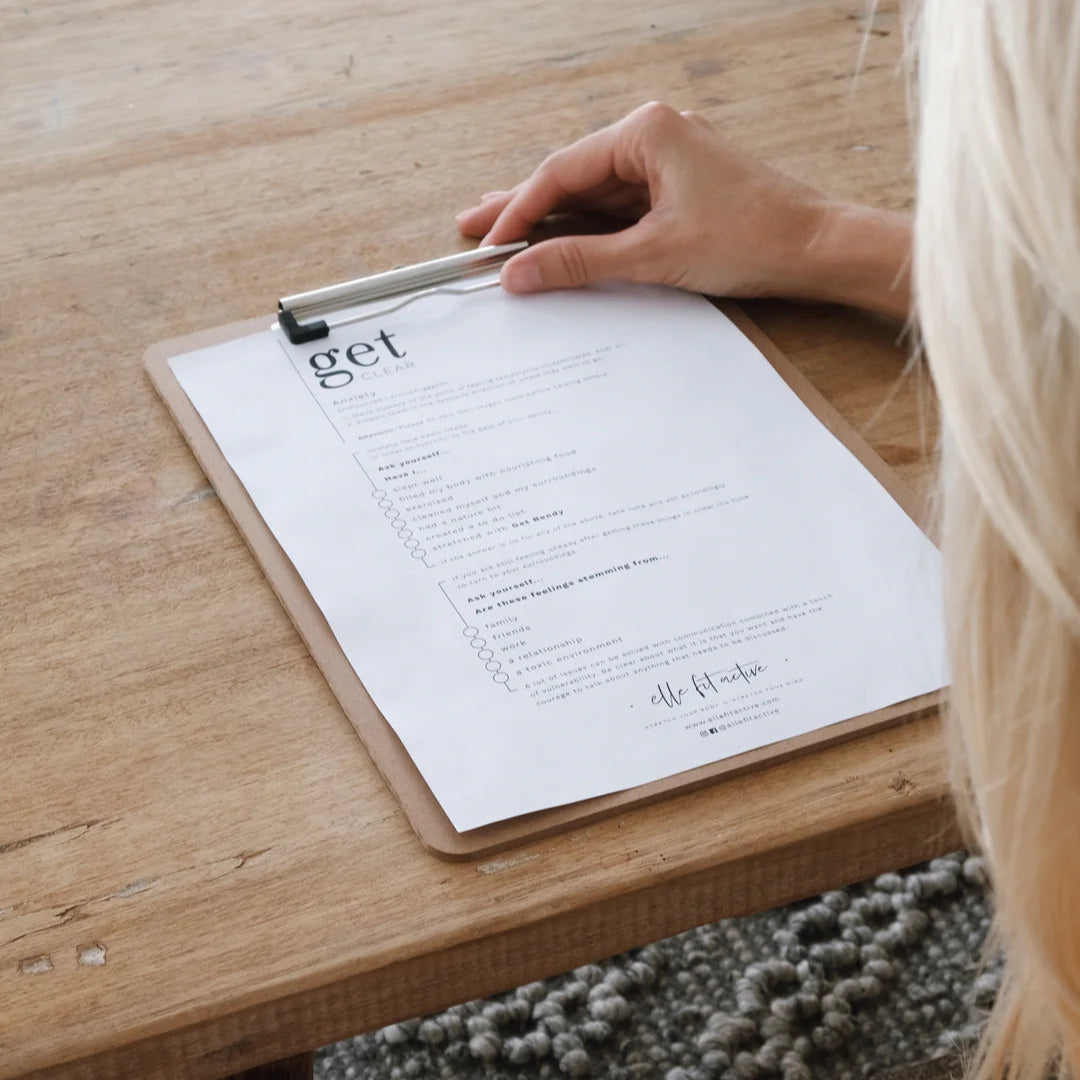
I always write my goals down. If I didn't, I'd absolutely forget them. It also helps me stay accountable and figure out a road map on how to get there. I'll write them in my Journelle and then break them down further on an A4 piece of paper that I stick on the wall in my office. This is where I break them down into small and achievable steps that I highlight along the way.
I love having a vision board too. My memory is terrible (out of sight, out of mind) so I find it very powerful having images and words somewhere obvious as a daily reminder.
To keep this short & sweet:
Goals = things I'd like to achieve (personal & work related)
Manifesting = things I'd like to experience or have that require many moving parts + elements that are out of my control
The process of these is relatively the same for me. I get very clear on what they are, visualise them and write them down. When it comes to manifesting that's where I throw a whole lot of emotion into it as well.
For example:
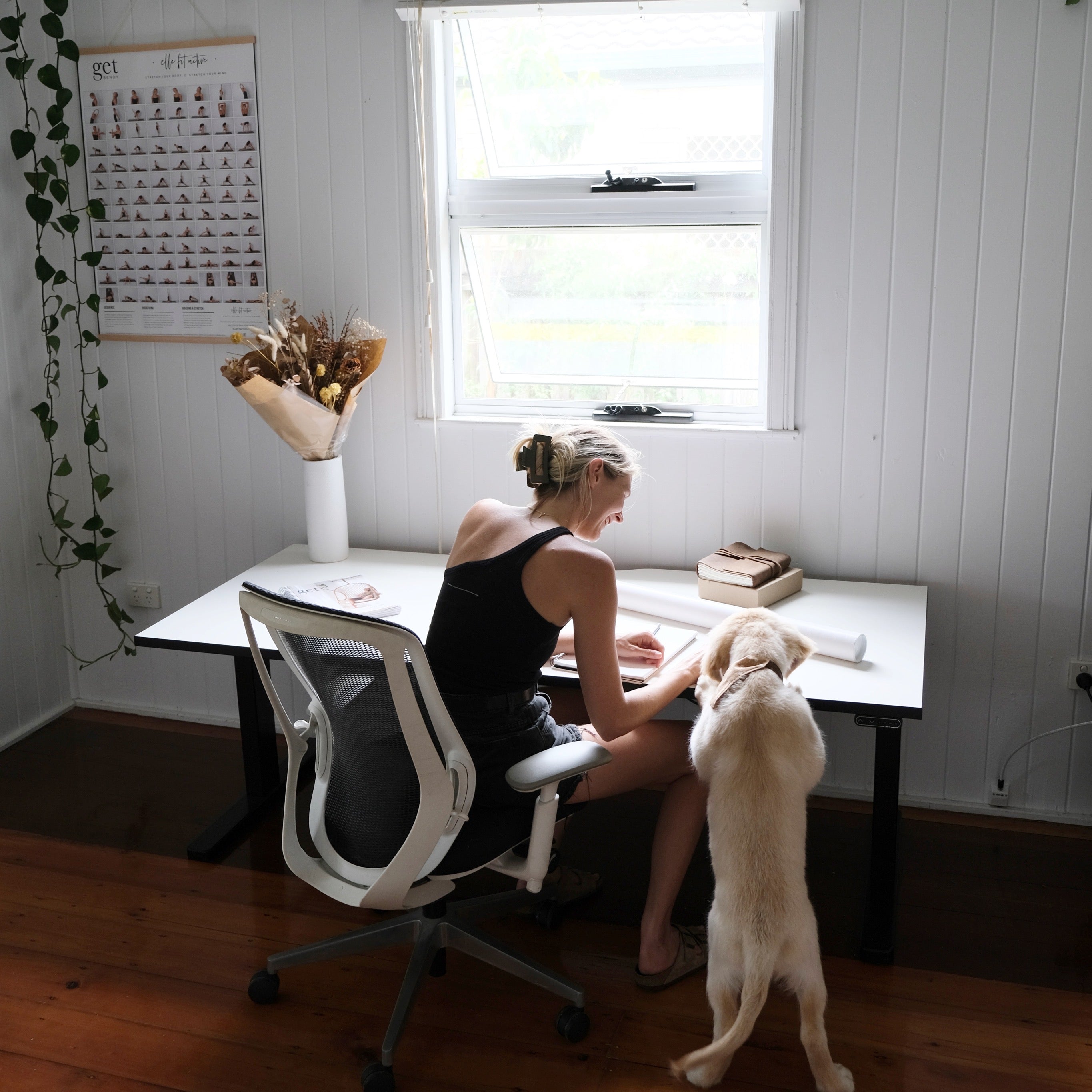
When I desperately wanted a puppy (who is now Sunny our beautiful Golden Retriever) we also needed a house that allowed pets. Once we met Sunny as a puppy I wrote a list in my Journelle titled 'Now to get clear on the perfect house'.
I wrote a detailed list on the 21st of September and hadn't looked at it again until after we inspected a property on the 1st of October. It had absolutely everything on the list and was better than I had imagined.
I find WRITING things down is always far more powerful than simply thinking it. When I pondered this, I had a funny thought or message pop into my mind – 'how will I know what you want if I can't SEE it?'. Since then, I always try to write things down to make them as tangible and obvious as possible. Repetition helps too!
Sitting in silence or meditating then journaling
If you're constantly listening to music or an audiobook, scrolling on social media, or watching a TV show, there is very little time to be with your own thoughts. I stopped taking my phone with me when I walk Sunny because I love having time to be in my own mind without distractions and also to be more present with him. We walk together for about an hour each morning, basically in silence, and I find this is the best way to start my day calmly. In the evenings Sam will join and this is a nice time to chat after work and have quality time together.
If you have no idea what to write, I highly recommend spending some time in silence or listening to a guided meditation to help you shift into a calmer state. That way your brain can begin to sift through whatever it wants to. Combining this with journaling afterwards is a great way to connect with yourself and feel very peaceful. I find words fly out onto the paper after I take time to sit quietly.
If you're eager to start journaling or keen to continue, I hope this has helped!
If you have any further questions, leave a comment below and I'll get back to you.
Love,
Elle :)




Leave a comment